Cellar / Field guide
Read your fruit before you pick
Sugar, acidity, taste and fruit condition belong in the same conversation.
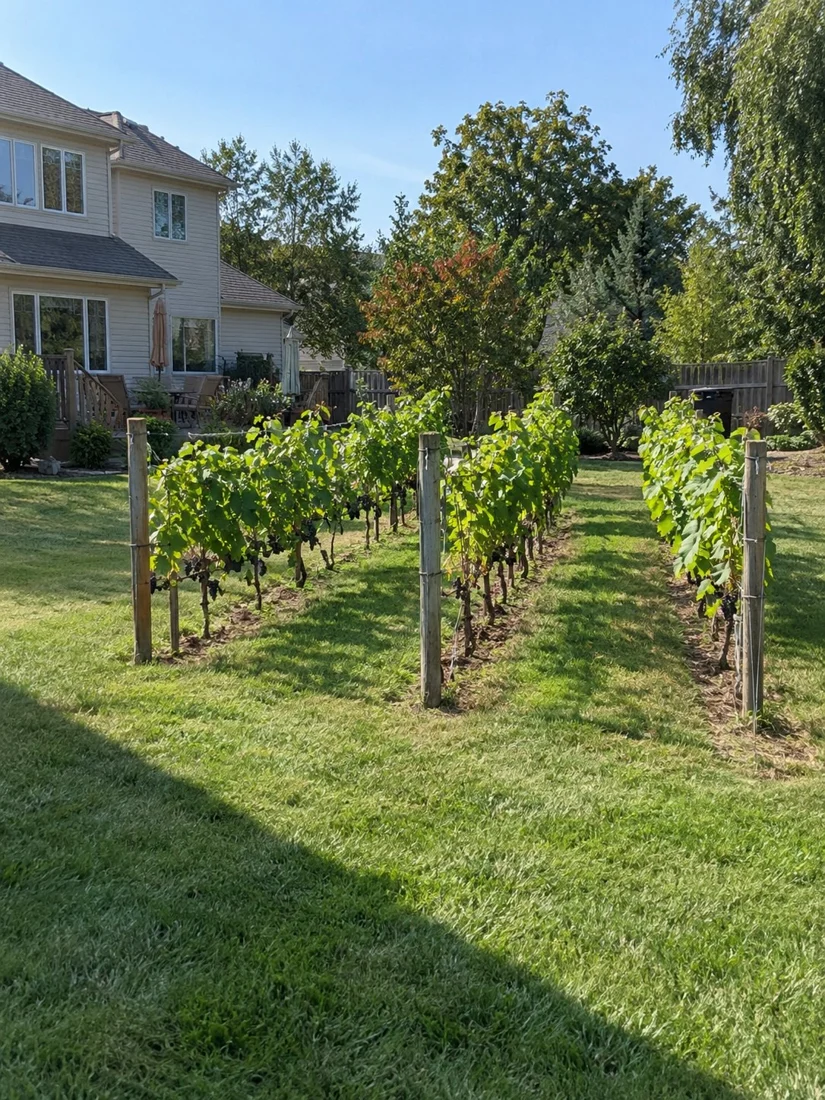
Keep three measurements separate.
Before fermentation, °Brix tracks soluble solids and helps estimate sugar. pH describes acidity on a logarithmic scale. Titratable acidity (TA) measures acidity by titration and is commonly reported in g/L as tartaric acid. They answer different questions; one cannot replace another.
Look for a trend, not a magic number.
Take representative samples across the planting, using a consistent method. Record the date, cultivar, sampling method, readings and units. Taste the berries and note changes in flavor, seed condition and fruit soundness. Include weather and disease pressure in the decision.
No single measurement establishes harvest readiness. Your intended wine style and the condition of the crop matter alongside the numbers.
Make your records usable.
- Use the same units when comparing samples.
- Keep pH and TA in separate journal fields.
- Write down unusual sampling conditions.
- Record the final harvest decision and its reason.